
Is There Life on Mars?
By: Hope Wilkos, Writer/Blogger
Photos: Reuters
Just months after the shuttle program has been retired and headed for the history books, NASA is undertaking a new mission, scouting for life on Mars.
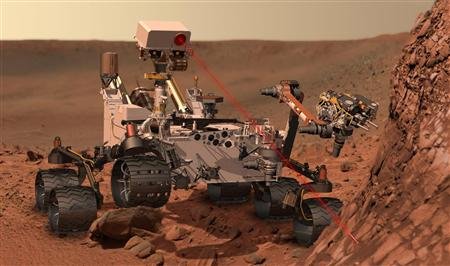
This Saturday at 10:02 A.M. EST, the 1980-pound United Launch Alliance Atlas 5 rocket, nicknamed Curiosity, will take off from the Cape Canaveral Air Force Station just south of Kennedy Space Center in Florida. The nuclear-powered rover is the size of a compact car.
The purpose of this $2.5 billion Mars Science Laboratory is a complex and mystifying one; to determine if there truly is life beyond Earth in the vast expanse of the Universe. In order to be able to answer that question, NASA has decided to target their strategy on past water on Mars and appraising the planet’s environment for a period of 9 months.
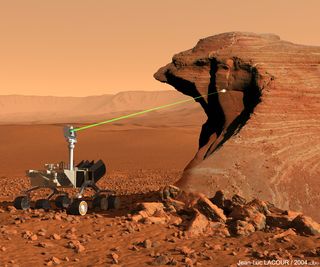
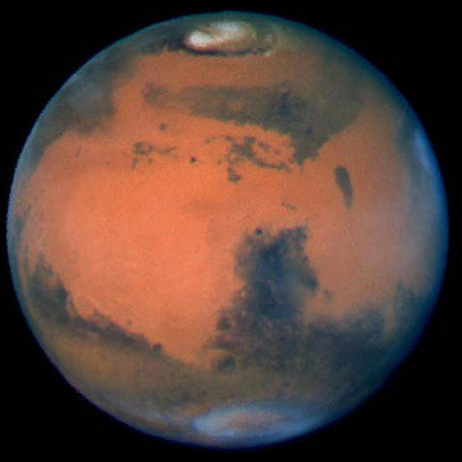
Mars is a very interesting planet. It has gone through extreme climate changes over the ages as its spin axis wobbled closer or farther from the sun. Rocks on Mars might hold the key to this burning question. This is not the first time that scientists have posed the question. In 2004, rovers Spirit and Opportunity landed on opposite sides of the Mars equator. The mission was extended to seven years. They discovered signs of water mingled with rocks in Mars’ past. But now as we head into a new phase of exploration, science wants to determine if there is life and looks to organics to unlock that mystery.
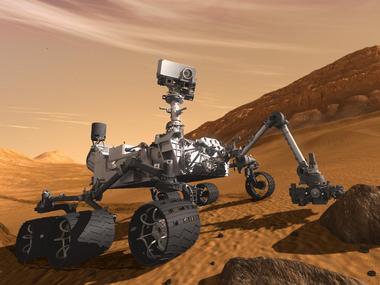
This new rover is built to last up to two years, complete with 10 tools to analyze the Gale Crater on Mars. It has a robotic arm with drill and on board chemistry labs to analyze powdered samples and a laser to pulverize rock and soil samples as far as 20 feet away. To derive its power, it is equipped with a plutonium battery that generates electricity from heat of radioactive decay. A 3-D camera will be placed atop Curiosity. The crater is a 96-mile wide basin with a layered mountain of deposits that stretches 3 miles above its floor, twice as tall as the layers of rock in the Grand Canyon. Speculation has it that the eroded remains of sediment that once filled the crater formed this wide mound.
The plan is to lower this spacecraft, Curiosity, to the floor of the crater in August of 2012 by an ingenious sky crane.
The mission is promising at this point for a Saturday launch. Weather appears to be favorable, Earth and Mars should be equally aligned for launch until December 18th and radiation monitors have been installed around the Cape Canaveral launch site in case of an accident even though the device is constructed to withstand impacts and explosions.
Once again, the United States strives to make the pages of history. Was there or is there life on Mars?



Comments are closed.