
ECONOMIC SITUATION FOR QTR 1 2013 AND EMPLOYMENT SITUATION FOR APRIL
By: Hope Wilkos, Writer/Blogger
On Friday, May 3, 2013, the country was nervously awaiting the release of the statement on the employment situation in April.
The statistics show that we are in a positive transition with the unemployment rate edging down from 7.6% to 7.5% month over month. This is the lowest rate since December 2008. The labor force participation rate remains unchanged at 63.3% in April.
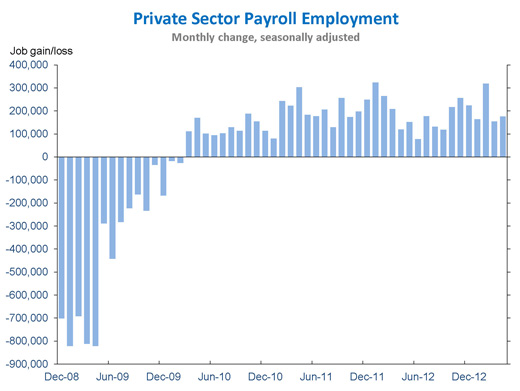
The Bureau of Labor Statistics shows that the private sector added 176,000 jobs in April. Total non-farm payroll employment rose by 165,000 jobs in April. February and March employment estimates were revised up by 114,000 jobs. The economy has now added private sector jobs every month for 3.8 straight months with a total of 6.8 million jobs. Over 800,000 private sector jobs have been added in the past 4 months.
Employment rose in professional and business services by 73,000 jobs, bars and restaurants by 37,900, retail trade by 29,300, health care and special assistance by 26,100. Construction declined by 6,000 (due to a fall in nonresidential construction employment) after growing for 10 consecutive months and adding 181,000 jobs in that period.
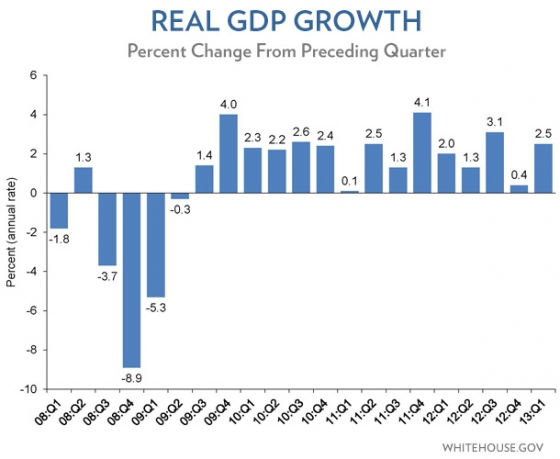
On April 26, 2013, the advance estimate of the GDP for the 1st quarter of 2013 was released. Thankfully, we are on a positive upswing with the economy posting its 15th straight quarter of growth as the total amount of goods and services grew at 2.5% annually for the quarter. Putting that in terms of the last 15 quarters, the economy has expanded 8.3% overall, with the private components of GDP growing by 12.2%. Real GDP is now at 3.2% longer than the previous business cycle peak in 2007:Qtr 4.
There are a few components that make up the GDP. Personal consumption expenditures, for example, rose by 3.2 percent at an annual rate in 2013:Q1, the fastest rate in over two years. Residential investment grew by 12.6 percent last quarter and has increased for eight quarters in a row, its longest streak since 2004-2005. Federal defense spending fell 11.5 percent at an annual rate in 2013:Q1, while federal nondefense spending declined at a 2.0 percent rate and state and local government purchases fell at a 1.2 percent rate.
It is important to note that the “advance” estimate of the first quarter GDP growth encompasses the first month after sequestration began on March 1. It is a good probability that the contraction in Federal defense spending reflects in part the onset of sequestration. These arbitrary and unnecessary cuts to government services will be a headwind in the months to come, and will cut key investments in the nation’s future competitiveness. The Congressional Budget Office has estimated that the sequester will reduce GDP growth by 0.6 percentage point for the year.
It is crucial to make America a magnet for good jobs to help workers earn the skills they need to do those jobs. That will assist in getting the economy to a more positive place and the economy will continue to flourish and thrive.
Statement by Alan B. Krueger, Chairman of the Council of Economic Advisers



Comments are closed.