
Success For Sea Conservationists
 By: Hope Wilkos, Writer
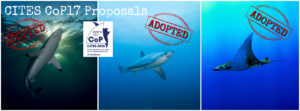
Marine conservationists around the world are ecstatic about the recent news that came straight out of Johannesburg, South Africa on October 4, 2016. The final decision that came as a result of more than 2/3 majority vote was all part of a gathering of CITES (www.cites.org) for one of their planned conferences. CITES is the Convention on International Trade in Endangered Species of Wild Fauna and Flora and basically is an international agreement between governments. Its aim is to ensure that international trade in specimens of wild animals and plants does not threaten their survival.
Coming directly out of this conference, international trade restrictions are being firmly put into place for devil rays, thresher sharks and silky sharks, under CITES Appendix II, to ensure that exports are from sustainable and legal fisheries. The time frame to implement this initiative for devil rays is six months while for the sharks, the time frame is one year. It is imperative that governments make putting these controls into place one of their top priorities in the coming days, weeks, months to meet the established timelines.
“We are elated by the resounding support for safeguarding the devil rays, some of the oceans’ most vulnerable animals,” said Sonja Fordham of Shark Advocates International. Devil rays have just one pup every two or three years, leaving them exceptionally susceptible to overfishing.
Ali Hood of the Shark Trust noted, “While we’re pleased by this important decision to regulate trade in silky sharks, we stress that complementary fishing limits and measures to reduce incidental catch are key to the effective conservation of this species.”
“We are grateful that governments recognize the value of healthy thresher shark populations for both fisheries and tourism,” said Ania Budziak of Project AWARE. (www.projectaware.org)
Earlier in the meeting, Parties agreed steps aimed at improving the traceability of shark and ray products, which is fundamental to CITES implementation. Countries’ interventions reflected a growing recognition of the vital role CITES can play in shark and ray conservation by enhancing data, improving management, and ensuring sustainable international trade.
Project AWARE, Shark Advocates International, Shark Trust, TRAFFIC, Wildlife Conservation Society, and WWF are working in partnership to promote the ray and shark listing proposals, with support from the Paul G. Allen Family Foundation.
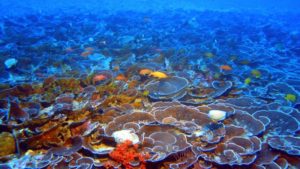
Announced on the very same day in October, NOAA-supported scientists that have been working on the Hawaiian Archipelago, have found that some of the island’s deep coral reefs are home to a unique species and extensive coral cover, as much as 100% in particular areas. This is far deeper than any recreational scuba diver can normally descend to. These mesophotic coral ecosystems, the deepest of the light-dependent coral reef communities found between 100 and 500 feet below the ocean’s surface. However, the way that this data was gathered was by a combination of submersibles, remotely operated vehicles, and technical diving to study these difficult-to-reach environments.Of the fish species documented on mesophotic reefs, 43 percent were unique to the Hawaiian Islands, which is more than double the 17 percent of unique species found on shallow Hawaiian reefs.
At the northern end of the archipelago, in the recently expanded Papah?naumoku?kea Marine National Monument, nearly all of the species are unique to the region, the highest level recorded from any marine ecosystem on Earth. These findings could offer further insight into the monument’s management.
In Maui’s ?Au‘au Channel, scientists discovered the largest uninterrupted mesophotic coral ecosystem ever recorded, extending more than three square miles at approximately 160 to 300 feet deep and including areas of 100 percent coral cover.
“The waters off Maui present the perfect environment for these mesophotic reefs to exist,” said Richard Pyle, Bishop Museum scientist and lead author on the publication. “The area combines clear water, which allows light to reach the corals; good water flow enhancing food availability; shelter from major north and south swells, and a submerged terrace between the islands at the right depth.”
Because of the challenges associated with working at such depths, mesophotic coral ecosystems are less understood and often not considered in coral reef management efforts. Overfishing, pollution, coastal development and climate change threaten coral reef ecosystems worldwide, and increased knowledge of mesophotic coral ecosystems will help characterize the health of coral reefs in general, particularly in the face of increasing stress.
“With coral reefs facing a myriad of threats, these findings are important for understanding, managing and protecting coral-reef habitat and the organisms that live on them,” said Kimberly Puglise, an oceanographer with NOAA’s National Centers for Coastal Ocean Science. “Some species studied can live in both shallow and mesophotic reefs, and the species could potentially replenish each other if one population is overexploited.”
“There is still so much of our ocean that is unexplored,” said W. Russell Callender, assistant NOAA administrator for the National Ocean Service “Working with academic partners and using innovative technology will enhance our scientific understanding of these important habitats and increase the resiliency of these valuable ecosystems.”
So much outstanding work is currently underway to help save the oceans and to respect the marine life that has chosen to call it home. This is what collaboration and devotion are all about.


