
THE FIRST EVER WHITE HOUSE FILM FESTIVAL
By: Â Hope Wilkos, Writer/Blogger
We all know of Tribeca Film Festival, Sundance Film Festival and Cannes Film Festival, but for the very first time ever, President Obama hosted the White House Film Festival on Friday, February 28, 2014. Â As part of this stimulating event, the President announced $400 million in new private sector commitments towards the ConnectED goal with support from companies, Adobe and Prezi.
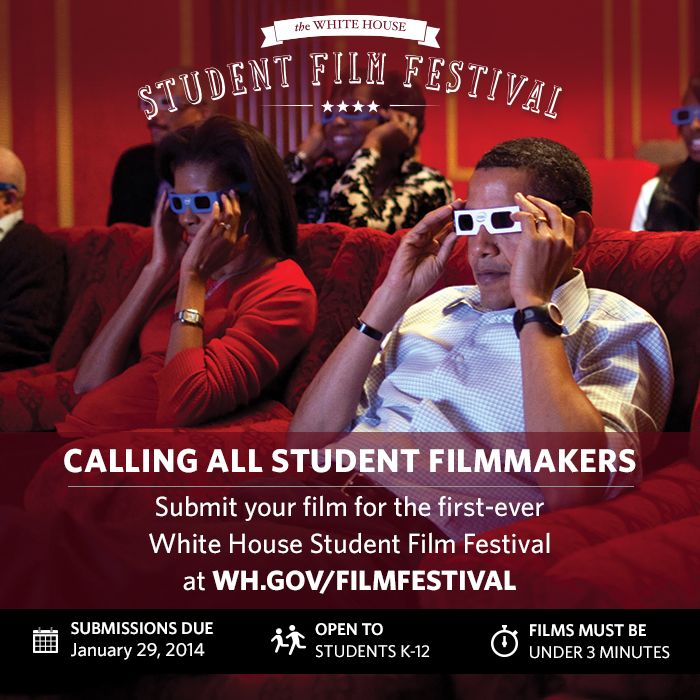
This Film Festival was geared towards the future of America, our students. Â It showcased how powerful that technology has become and the Administration promises to bring the nation’s classrooms into the 21st century with high-speed internet and cutting-edge educational technology.
The plan is quite in line with the path that the country is taking to tackle the future, to connect 99% of students to next-generation broadband and wireless technology within a 5 year time span.
Adobe will contribute over $300 million in free software to our schools which will assist in creative programs for Photoshops and Premiere Elements. Â Training resources will be readily available to teachers.
Prezi will contribute $100 million in software that is to be used to put together impressive presentations among other innovative ideas.

So how does the White House Film Festival play into all of this educational information? Â Last November, this first-ever White House Film Festival was announced and is open for K-12th grade students. Â The goal was to create a short film or documentary on technology in the classroom and what role it will take on as the future marches onwards and we will see how it supports science, technology, engineering and math. Â The entries began to pour in with over 2,000 videos submitted and reviewed.
The White House, along with the American Film Institute, brought the competition down to 16 choices.  The selected videos were screened in four groups: (1) Young Visionaries; (2) Future Innovators; (3) World of Tomorrow; (4) Building Bridges. The films were presented by Kal Penn, Neil deGrasse Tyson, Bill Nye, and AFI President and CEO Bob Gazzale. Conan O’Brien also addressed the students by video.
In addition to the celebration of the student films and the President’s remarks, FOX and National Geographic Channel, will treat the attendees to a sneak peek of the first episode of the upcoming COSMOS: A SPACETIME ODYSSEY television series that celebrates the scientific perspective and the importance of science, technology, engineering, and math education.
The students who submitted the Official Selections will be joined in the audience by students who submitted honorable mention videos, parents, teachers, business leaders, and education advocates.
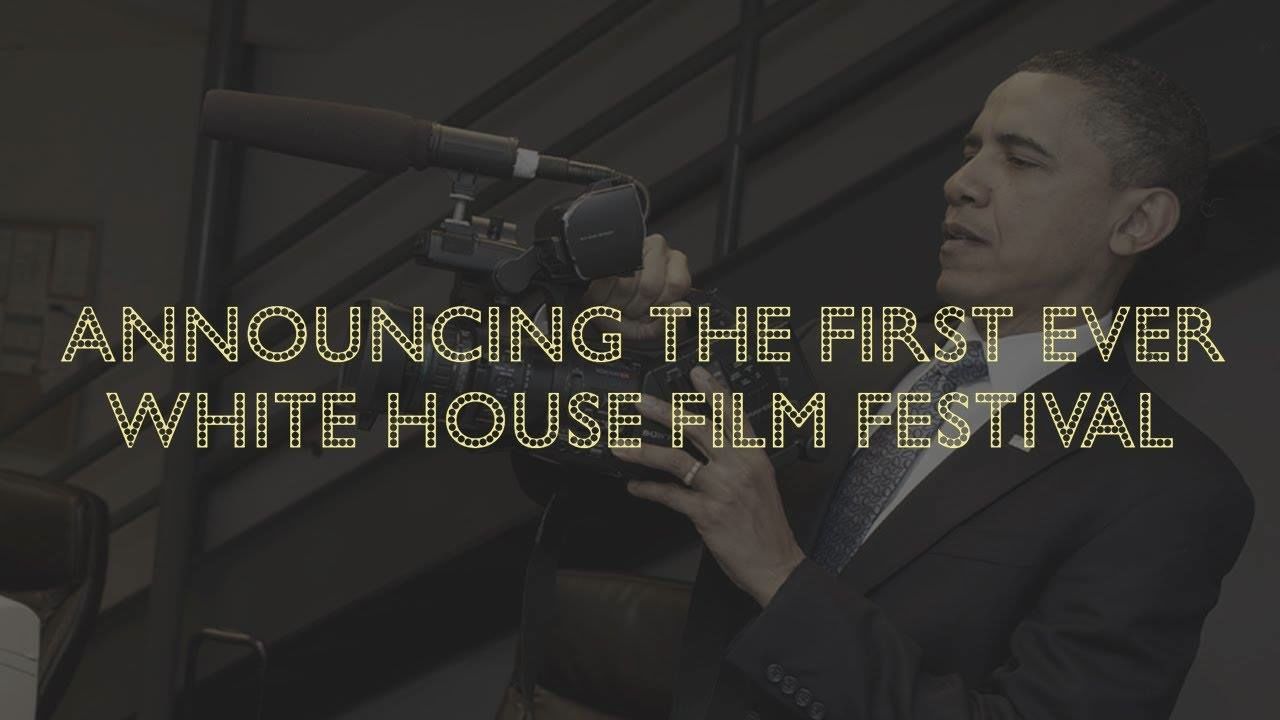
Per a White House release, here is the information on the 16 categories and those that dare to make their mark in the film industry. Â This is only just the beginning on a road filled with creativity and intuition.
Young Visionaries
Technology, Documentary, My Dad, and Me. Seventeen-year-old Shelly Ortiz became interested in filmmaking once she began attending the Metropolitan Arts Institute in Arizona in eighth grade. In “Technology, Documentary, My Dad, and Me,” Shelly tells us about how the technology in her school has allowed her to find her passion and ability as a filmmaker and use that ability to tell the story of the people she cares about.Â
Teleportation Investigation of 2014. Delaware, Ohio High school students Lexus Lexus Wolf, Natalie Koeritzer, Caroline Proffit, and Elizabeth Russell make up the group The Extrazzlers. In their video “Teleportation Investigation of 2014,†The Extrazzlers created an original music video about the technology in 2014 and what it might look like in the future.Â
Through the Lens of a Tiger. Seniors Alicia Oluhara and Jason Perry attend Woodrow Wilson High School in Washington, D.C. In their submission to the White House Student Film Festival, they detail the many ways technology has enabled them to learn about broadcasting and journalism to tell stories and chase their dreams.
Stay Curious: Technology in the Classroom. Seventeen-year-old Kayla Briët from Cypress, California has a passion for film, music, and the arts. Her submission focused on how technology can foster both academics and creativity. Kayla is also an accomplished musician who produced and recorded the original music featured in her film “Stay Curious: Technology in the Classroom.”
Discovery. Irvington High School sophomore Tiffany Lin from Fremont, California learned about the White House Student Film Festival by following the White House on Instagram. Her film, “Discovery,†shows how technology is used in the everyday life of a student through the advents of an action figure and an omniscient person who guides it.
Beyond the Crossfire. High school students Gabriel Garcia, Tirsa Mercado, and Rachel Walden from High Tech High in Chula Vista, California submitted a short film about a larger documentary being produced by more than 45 fellow students designed to elevate youth voices in the discussion about how to prevent and reduce violence and make our schools, homes, and neighborhoods safer.
Future Innovators
Art Tech Collaboration. Elementary school students Emily Villazon, Sarah Matus, Jessica Barney, Reyah Doshi, and Garrett Dahn at Highlands and Mill Street Elementary Schools in Naperville, Illinois came together to create this dramatization of the interaction between two schools without ever meeting face to face. Student volunteers helped animate paper cutouts, created props, edited the film, and composed a soundtrack. This was a collaborative effort that required students to work together to create a cohesive story.
PIP. High school students Richard White, Nicolas Ramey, and Emil Willmann from Louisiana teamed up to tell the story of a young boy who uses technology to make a presentation on what he wants to be when he grows up.
Technology and Me. First graders Emily Kretschmer, Eleanor Daken, Malaika Wande, Yoan Pinsonneault, Veronica Techane, Makaia Spittel, Bezawit Gessesse, and Sydney Humpert from Silver Spring, Maryland gave us a pure and simple look at how the youngest of our students see the past, present, and future of classroom technology.
World of Tomorrow
Technology in Education: A Future Classroom. High school junior Daniel Nemroff from Wynnewood, Pennsylvania set out to show us what education might look like in the future. In “Technology in Education: A Future Classsroom,” Daniel replaces standard texting with a conceptual example of Objective-Based Learning where students work independently, at their own pace, and are motived by achieving a virtual objective.
Full S[T]EAM Ahead – How Technology Rocks the Classroom. Elementary school students Miles Pilchik and Gabrielle Nafie from SciTech Kids in New York, New York came together to show us how technology can spark children’s innate curiosity through hands-on experiences. From iPads to 3D printers, “Full S[T]EAM Ahead” shows us how STEAM activities requires them to think like scientists, inventors, and Makers.
Tomorrow’s Classroom. Eighth grader Alexander Emerson from Manchester, Massachusetts shows us how his classroom uses technology to collaborate with students in Uganda, Rwanda, and Brazil to design a more efficient cookstove. Alex has been making films for several years, including an adaptation of Ambrose Bierce’s short story “An Occurrence at Owl Creek Bridge.”
Building Bridges
Alex. Eleventh grader Aaron Buangsuwon from Atladena, California shot his video “Alex” about his brother, Alex, to shed light on how technology is helping kids with dyslexia and/or dysgraphia learn in a modern school environment. In order to stand out from the other submissions, and in honor of his brother’s love of the outdoors, Mitch recorded his video out in nature instead of inside the classroom.Â
Posnack Technology: A Day in the Life of Kyle. Seventh graders Marni Rosenblatt, Justin Etzine, and Rachel Huss at the David Posnack Jewish Day School in Davie, Florida came together to tell the story of fellow student Kyle Weintraub, who is being treated for lymphoma in Philadelphia but continues to attend school at Posnack through the use of a special robot. Using the robot, Kyle is able to interact with friends and teachers, venture through the hallways, and participate in class as if he were physically present.
Double Time. Eighth graders Joshua Leong and Stephen Sheridan from Longfellow Middle School in Falls Church, Virginia told the story of two sister schools who collaborate on a school project from different parts of the world by using technology. Josh and Stephen wrote the script and traveled to schools and airports to tell their story.
Hello From Malaysia. Seventeen-year-old Kira Bursky from Asheville, North Carolina has been making films since she was only 10. Her film chronicles a fictional girl, Aiman, who, after being sent to boarding school in the United States, uses technology both to maintain a connection with her family back home in Malaysia and also to share her culture and build connections with her new classmates.
Go to http://www.whitehouse.gov/filmfestival to learn more.

Photos courtesy of The White House



Comments are closed.